Vīṇā and Ḍamaru (Vīṇā-ḍamaruka-vādya)
Vīṇā-ḍamaruka-vādyaPlay a classical string or hand drum: vīṇā, ḍamaru, ektara, dholki.
The story of this art
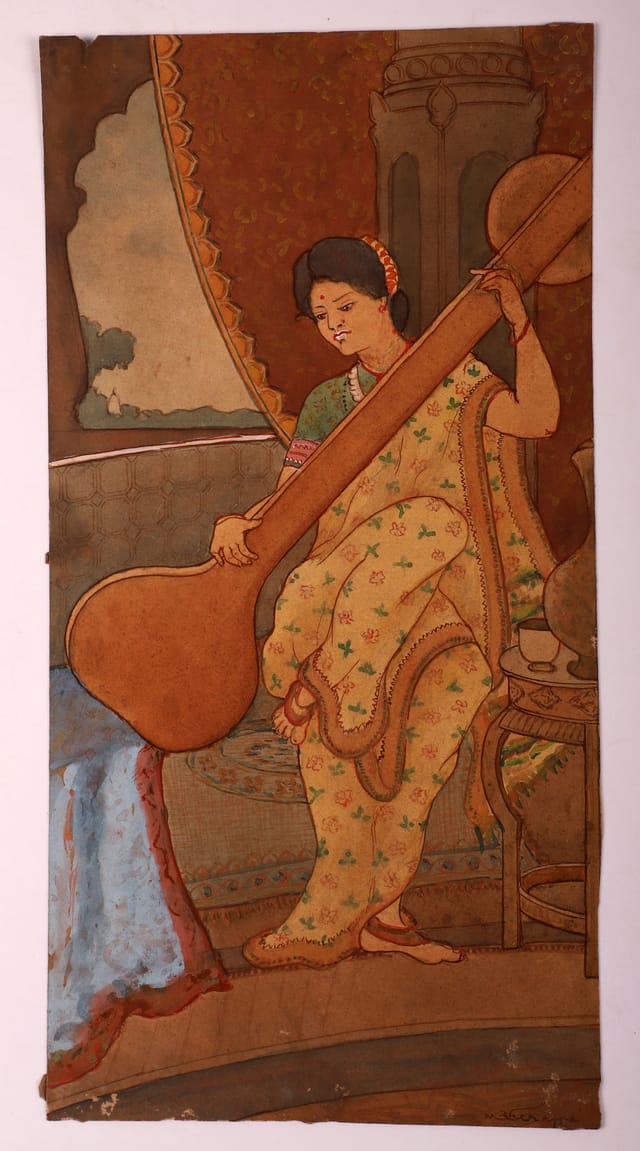
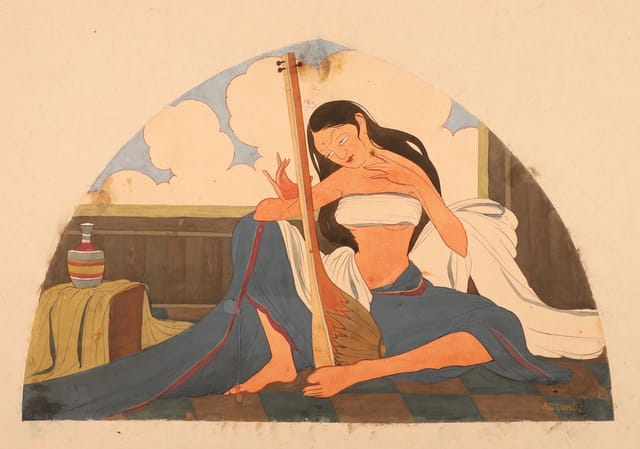
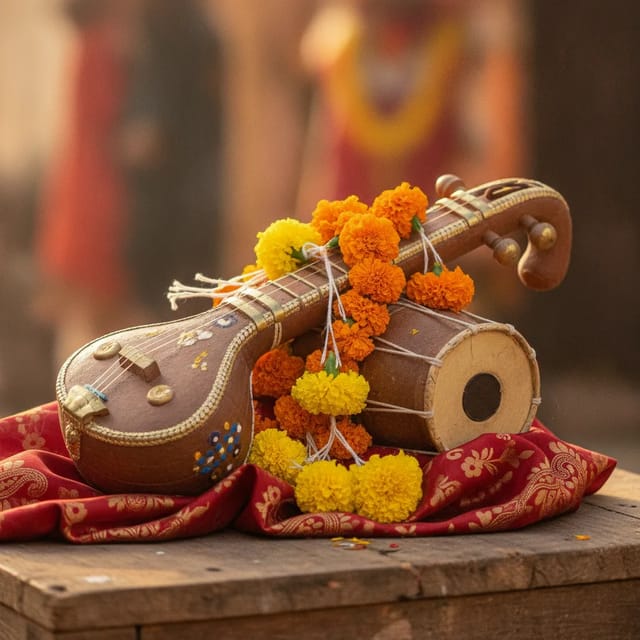
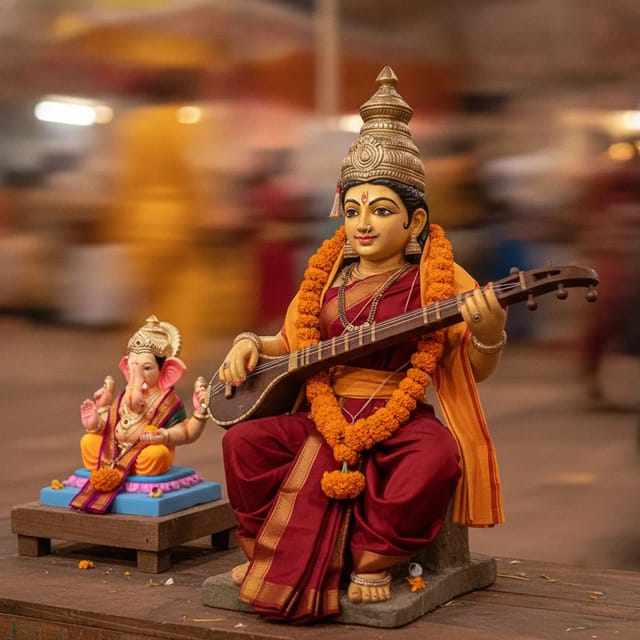
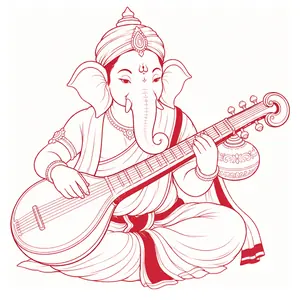
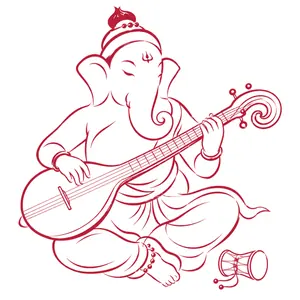
Vina-damaruka-vadya is the traditional practice of playing stringed and percussion instruments, specifically the long-necked vina and the hourglass-shaped damaru drum. The art requires training in posture, rhythm, and tone control. A musician learns to produce melodic lines by plucking metal strings or create precise rhythmic cycles through swift hand movements. This art is recorded in the classical lists as an essential discipline for artistic expression. A concrete technical detail lies in how these instruments are constructed and operated. The damaru relies on two knotted cords attached to its narrow waist. When the player twists their wrist back and forth, the knots strike opposite leather drumheads to produce a rapid, rattling beat. On the rudra vina, hollow dried gourds act as sound resonators beneath a wooden tube, where brass frets are held in place using a mixture of beeswax and resin. This tradition remains active across India today. In Maharashtra, related instruments such as the single-string ektara and the dholki drum accompany devotional warkari processions and traditional lavani music, while classical performers continue to pass down the repertoire of the vina.