Board and Dice Games (Dyūta-viśeṣa)
Dyūta-viśeṣaPlay the old boards: chaupar, sagargote, pachisi, chess.
The story of this art
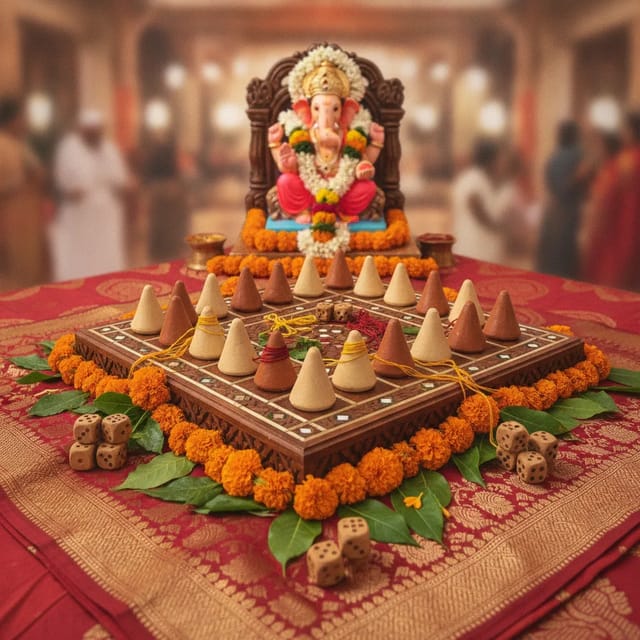
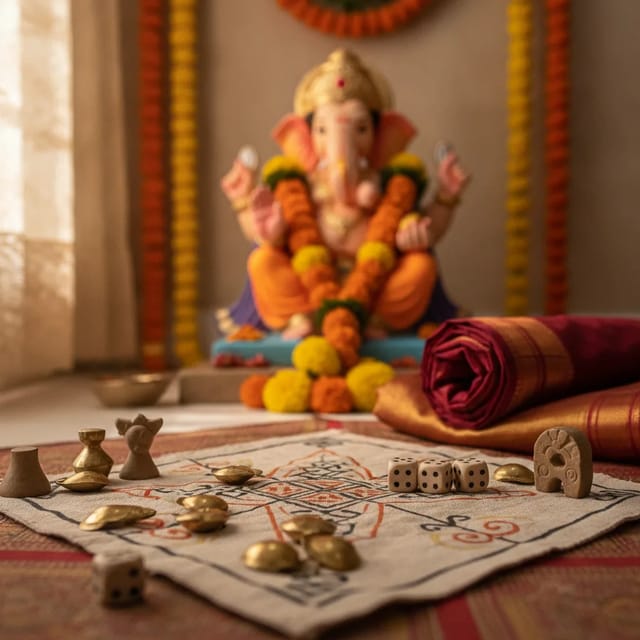
Dyuta vishesa is the classical art of playing board and dice games, combining strategic planning, numerical skill, and an element of chance. Practised for mental exercise and social entertainment, players compete using carved wooden markers, polished stones, or seeds moved across cloth or wooden grids. The art encompasses ancient games such as chaupar, pachisi, and early forms of chess. This practice is attested in early epics such as the Mahabharata, as well as across the classical lists of arts. A distinct detail of the craft lies in its physical components and scoring methods. In games like pachisi, players roll long four-sided wooden dice or toss six cowrie shells onto a central cloth space, calculating moves based on how many shells land with their open side facing upward. Today, the art survives throughout India during cultural celebrations like Diwali, where playing traditional board games brings families together. In Maharashtra, games such as pachisi and sagargote remain popular domestic pastimes. Artisans in regions like Sawantwadi continue to produce hand-painted wooden game pieces and embroidered cloth boards, ensuring that these historic pastimes remain active in contemporary play.