Rangoli (Taṇḍula-kusuma-bali-vikāra)
Taṇḍula-kusuma-bali-vikāraLay a rangoli in rice, colour or flowers: the doorstep one counts.
The story of this art
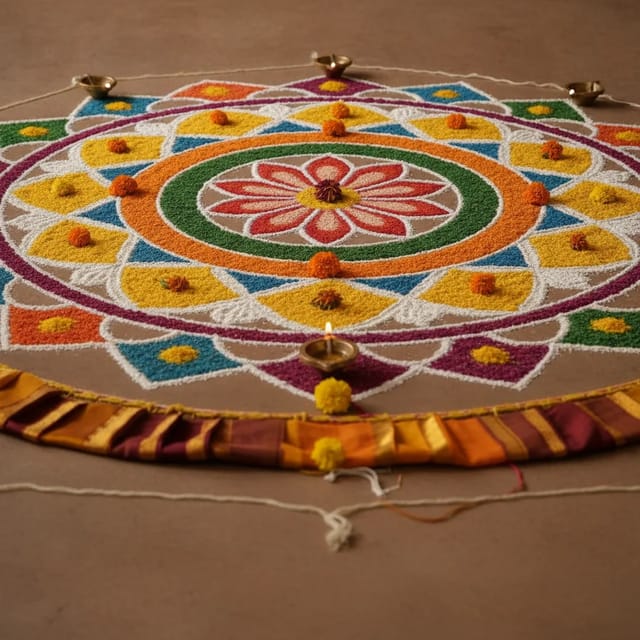
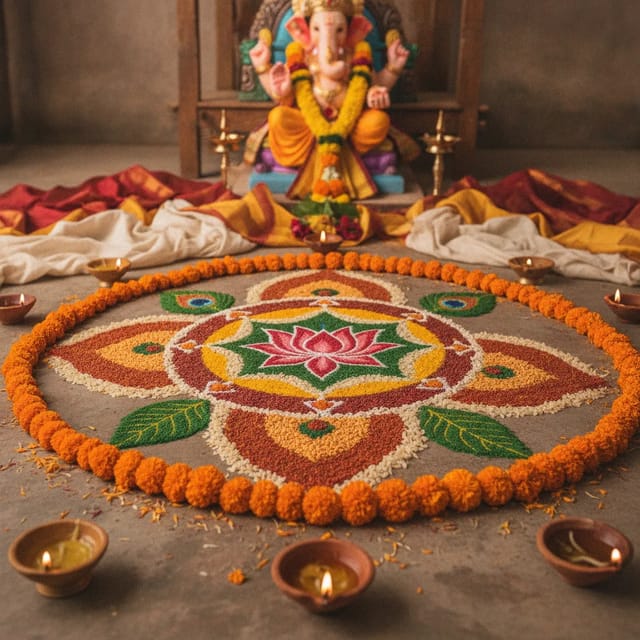
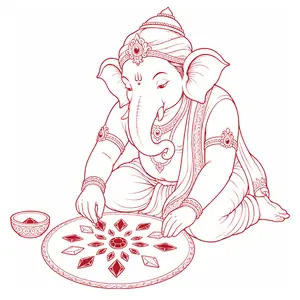
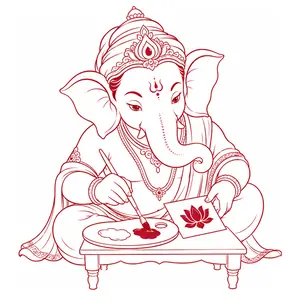
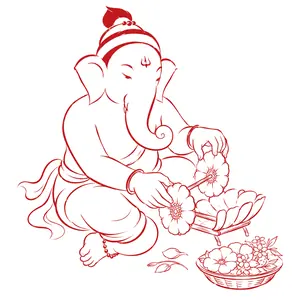
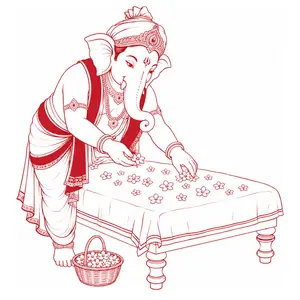
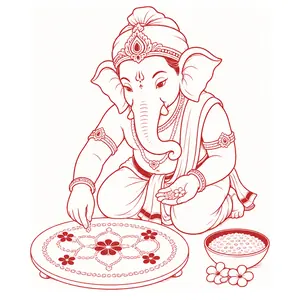
Tandula kusuma bali vikara is the classical art of creating ephemeral floor designs using rice, colored powders, and flower petals. Practised to mark sacred rituals, welcome guests, and sanctify living spaces, the art turns plain entrances and courtyards into vibrant geometric surfaces. To create a pattern, the practitioner pinches dry rice flour or ground pigments between the thumb and forefinger, releasing a steady stream of powder while moving the hand across the floor. Attested in the classical lists of traditional arts, the craft combines mathematical precision with decorative beauty. A specific technique requires placing a grid of dots on the ground before joining them with smooth, continuous lines to build complex symmetrical shapes. Using natural materials like coarse rice meal also serves an ecological purpose, as it provides food for small insects and birds. This tradition remains a part of daily life across India under names such as rangoli, kolam, alpana, and muggu. In Maharashtra, women draw these motifs every morning at their doorsteps and expand them into elaborate compositions during festivals like Gudhi Padwa and Diwali.