Strewing Flower Beds (Puṣpāstaraṇa)
PuṣpāstaraṇaDress a space in loose flowers: a mandap floor, a threshold, a shrine.
The story of this art
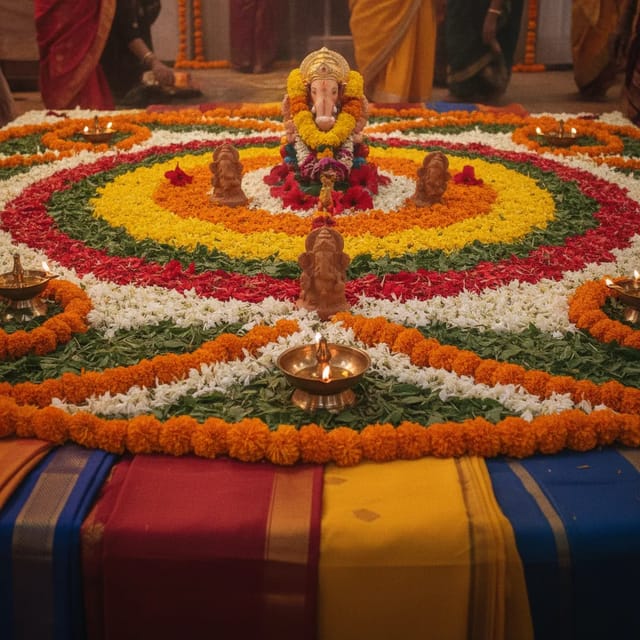
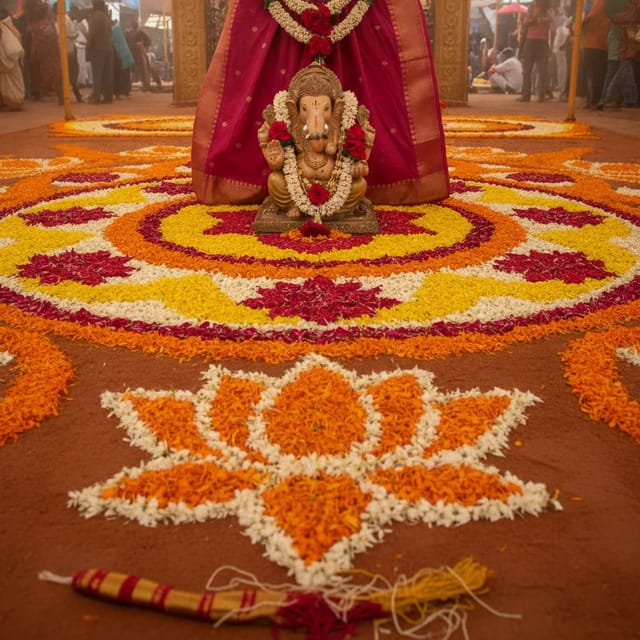
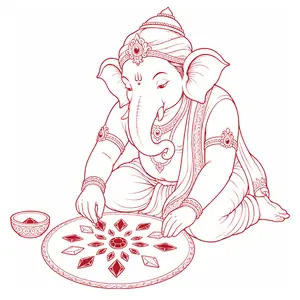
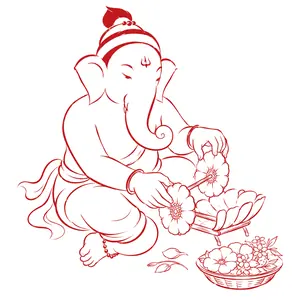
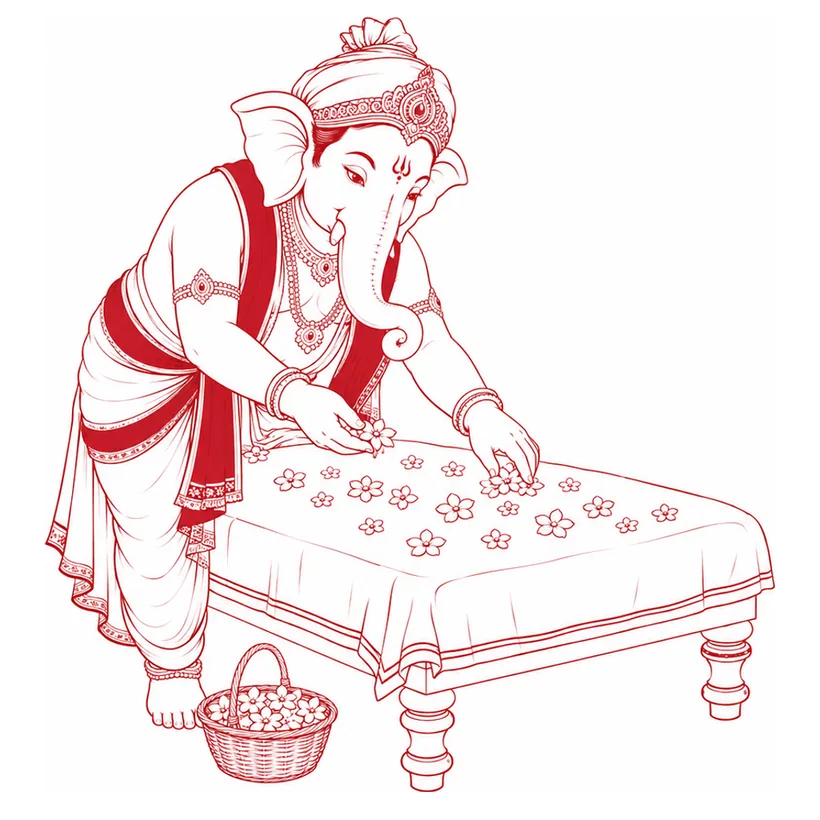
Pushpastarana is the classical art of carpeting surfaces with loose flowers and fresh petals. Practised to prepare spaces for worship, rest, or celebration, it transforms floors, shrines, thresholds, and bedchambers into fragrant, colorful carpets. Practitioners select blossoms for their scent, texture, and color, stripping stems and separating petals before laying them on wet cloth or damp sand to preserve freshness. This practice is attested in the classical lists of sixty-four arts recorded in texts such as the Kamasutra. A concrete detail of the craft involves layering fragrant jasmine, rose, and marigold petals in planned geometric patterns so that light pressure releases their natural essential oils into the room. The bottom layer is often kept damp to ensure the floral bed remains vibrant for hours. Today, Pushpastarana lives on across India during major festivals and rituals. In Maharashtra, woven floral carpets decorate home altars, thresholds, and wedding mandaps during Ganeshotsav and Diwali. Similar flower beds, such as the pookkalam of Kerala, show how this ancient art of ephemeral decoration continues to thrive in Indian homes and temples.